

Categories
Concierge Real Estate, Inherited House, Selling A HomePublished July 31, 2026
How Out of State Heirs Can Sell a Property Near Boston

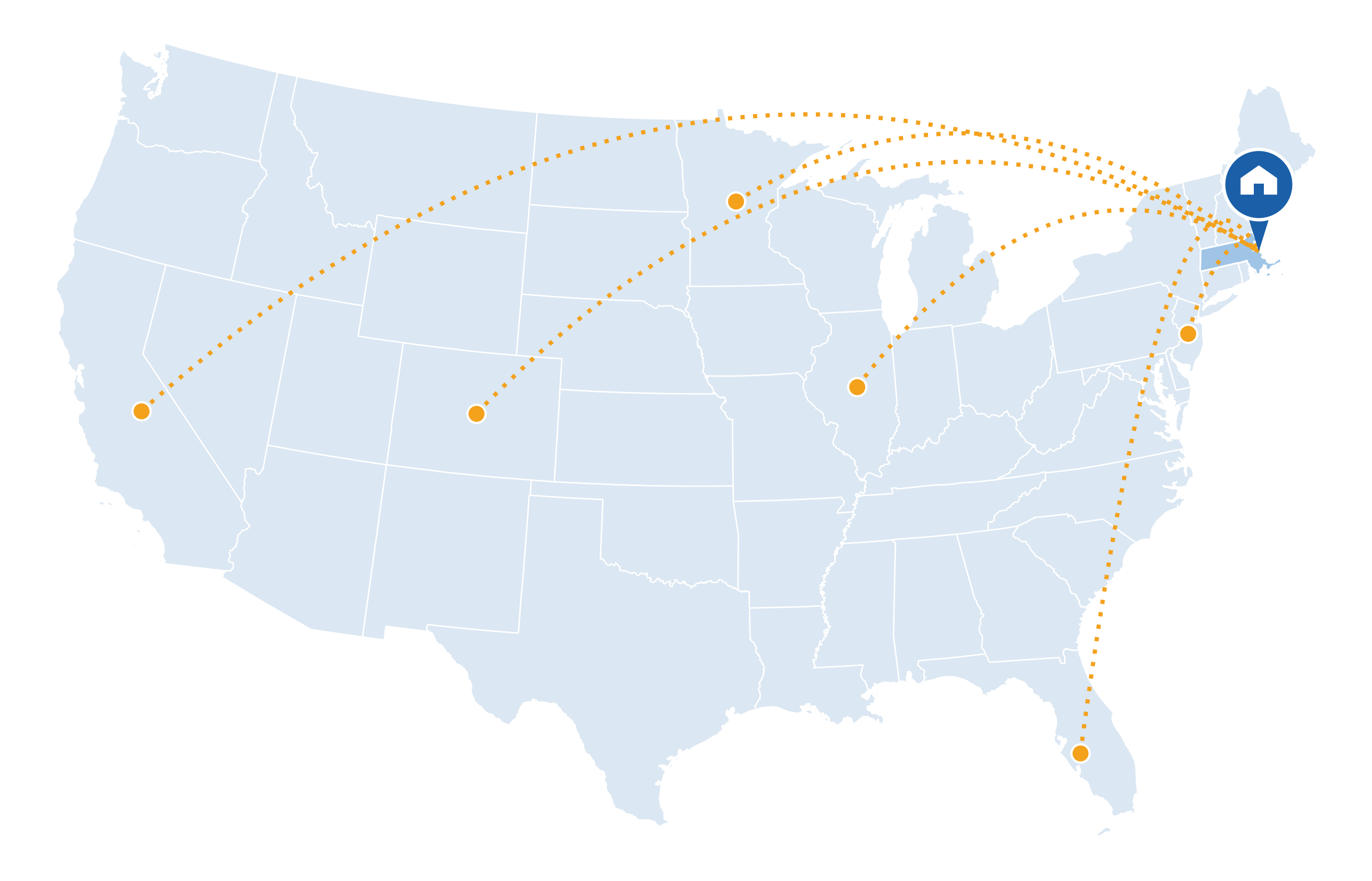
A remote seller's guide from VIP Group serving Greater Boston, MetroWest, and the South Shore.
Yes, out of state heirs can sell an inherited property near Boston without flying back and forth. The remote sale comes down to three things: confirming your legal authority to sell (usually through Massachusetts probate), letting VIP Group assemble and manage a local team on your behalf, and closing with a mix of electronic and original "wet" signatures handled by overnight mail or a power of attorney. VIP Group provides the contacts, makes the introductions, and handles the clean outs, appraisers, contractors, and closing so most out of state heirs never need to set foot in Massachusetts to get the home sold and the proceeds distributed.
The short version
- You do not have to live in Massachusetts to be the personal representative or to sell the home.
- Probate (often the faster "informal" track) usually gives you clear authority to sell; if the person who passed lived in another state, you may need a short "ancillary" probate here.
- VIP Group assembles the whole team for you: clean out crews, appraisers, contractors, attorney, and makes the introductions, so you're never cold-calling vendors across the country.
- Many contracts can be e-signed, but certain closing documents need original "wet" signatures which can be handled by overnight mail or a power of attorney. Funds are wired to you after closing.
Can you really sell a Massachusetts home from another state?
Losing a parent or relative is hard enough. When the house is 500 or 3,000 miles away, the logistics can feel impossible: Who checks the mail? Who lets the plumber in? How do you sign closing papers from Arizona or Florida? The reassuring answer is that selling an inherited home in Massachusetts from out of state is routine, real estate teams do it every week. The key is treating distance as a coordination problem, not a barrier. Once the right people are in place locally, your job becomes making decisions and signing documents, both of which you can do from your kitchen table.
VIP Group focuses on exactly these situations across the Greater Boston area: including MetroWest towns like Framingham and Wayland and South Shore communities like Quincy, Braintree, and Milton. Below is the same step-by-step path we walk out-of-state heirs through, start to finish.
Step 1: Confirm your legal authority to sell
Before a home can be sold, someone needs the legal right to sign for the estate. In Massachusetts, that person is the personal representative (what many people still call the "executor" or "administrator"). Here is what out-of-state heirs should understand:
You can serve as personal representative from another state
Massachusetts does not require the personal representative to live in-state. An out-of-state heir can be appointed, sign documents remotely, and direct the sale. In some cases the court may ask an out-of-state representative to post a bond or appoint a local agent for service — small hurdles your attorney handles routinely.
Informal probate is often the faster path
Massachusetts offers an "informal" probate track handled by a magistrate rather than a full court hearing. It can move quickly, an informal order can be issued as soon as seven days after the date of death, once required notice is given to interested parties. Once the court issues Letters of Authority, the personal representative generally has the power to sell the home. Estates with disputes, missing heirs, or a contested will may need the slower "formal" track instead.
If the person who passed lived out of state, plan for ancillary probate
Here is a nuance that catches many families off guard: if your relative was a resident of another state but owned real estate in Massachusetts, the main probate happens in their home state, and a secondary "ancillary" probate is opened in Massachusetts specifically to transfer the property here. It is usually straightforward, but it is an extra step to build into your timeline.
| Good to know: Massachusetts creditors generally have one year from the date of death to bring claims against the estate. You can often sell the home well before that period ends, but final distribution of all proceeds may wait until the estate is settled. Your attorney will tell you where your estate stands. |
VIP Group works alongside your probate attorney and tax professional and can recommend trusted local ones if you don't have them yet.
Step 2: VIP Group assembles your local team for you
The single biggest stressor for out of state heirs is vendor whack-a-mole: finding a clean out company here, an appraiser there, a handyman who ghosts you, an attorney in a different time zone, all from 1,000 miles away, with no idea who to trust. This is exactly what VIP Group takes off your plate. Rather than handing you a to-do list, VIP Group assembles the entire local team, provides the contacts, makes the introductions, and manages the vendors on your behalf from start to finish.
Here's what VIP Group lines up and coordinates for you:
- Property check-ins — a trusted local person visits to secure the home, take photos, and flag issues like leaks, pests, or heating problems.
- Cleanout crews — VIP Group brings in and supervises the cleanout team: setting aside keepsakes to ship to you, donating usable items, and clearing the rest.
- Appraisers for items of value — VIP Group arranges appraisers for antiques, jewelry, artwork, collectibles, and other valuables inside the home, so nothing of worth is donated, tossed, or overlooked during the cleanout.
- Contractors and repairs — vetted contractors are introduced and their bids reviewed on your behalf, only the work that actually improves your net proceeds.
- Probate attorneys — if you don't already have one, VIP Group can introduce trusted local probate and real estate attorneys.
- Marketing, negotiation, and closing — pricing, listing, showings, offer review, and closing coordination, so documents and deadlines line up without you chasing anyone.
You get one point of contact and one set of introductions. VIP Group handles the rest of the phone calls.
Step 3: A Comparative Market Analysis and side-by-side strategy comparison
You can't price a home you can't walk through but VIP Group can. We visit the property, document its true condition, and prepare a Comparative Market Analysis (CMA) using recent sales from the specific neighborhood, not a statewide average. This matters near Boston, where value can swing block by block: a home in Framingham, Quincy, or Wayland will each answer to a different buyer pool and price band.
More importantly, VIP Group doesn't just hand you one number. You get a side-by-side comparison of your realistic options: sale price, costs, timeline, and effort for each, so you can make a confident decision from afar without guessing.
It looks like this:
| Strategy |
Sell as-is (investor / cash) |
Light prep + list |
Full prep + list |
| Est. sale price |
Lowest |
Higher |
Highest |
| Out-of-pocket cost |
$0 |
Low (clean, paint) |
Higher (repairs, updates) |
| Time to close |
~2–3 weeks |
~5–8 weeks |
~8–12+ weeks |
| Your effort |
Minimal |
Low |
Moderate |
| Best when |
Home needs major work or you want speed |
Home is solid, minor refresh pays off |
Strong market, updates return more than they cost |
Illustrative example — VIP Group fills in the real numbers for your specific home and current market.
Seeing the numbers, costs, and timelines next to each other is what lets out of state heirs choose a path in one conversation instead of second-guessing it for weeks.
Step 4: Handle cleanout, repairs, and prep from a distance
Inherited homes are often full. Decades of belongings, furniture, and paperwork. Handling that remotely is very doable with a system:
- Identify keepsakes first. Your team can video-walk the home with you so you point out what to set aside and ship, before anything is cleared.
- Donate and remove the rest. A cleanout crew clears the home to "broom-clean" condition.
- Prep only what pays off. Fresh paint and a deep clean often return more than a major renovation. If the home needs significant work, selling as-is may net more than sinking money into repairs you'd manage from another state.
Throughout, you approve scopes and budgets before work begins. No surprise invoices and no decisions made without you.
Step 5: Decide how to sell — on-market or as-is
Out of state heirs generally weigh two routes, and the right one depends on the home's condition and how much coordination you want to take on:
List on the open market
Best when the home is in reasonable shape and you want the highest possible price. Your team handles staging, photography, showings, and negotiation. This path usually takes longer but tends to produce the strongest net for a solid property.
Sell as-is to an investor or cash buyer
Best when the home needs major work, is packed with belongings, or you simply want speed and certainty. You skip repairs and showings and close on a predictable date. A good agent can bring you vetted investor offers and compare them honestly against the open-market path — so "as-is" doesn't mean "leave money on the table."
Step 6: Sign and close remotely
This is the step people worry about most, and it's very manageable from a distance as long as you know that not every document is signed the same way. Some paperwork can be signed electronically, while certain closing documents must carry an original "wet" signature. Here's how it breaks down:
- Electronic signatures handle most of the earlier paperwork: the listing agreement, the purchase and sale contract, and many disclosures can typically be signed online.
- Wet signatures for closing documents. The deed and several final closing documents generally require original, ink signatures — often notarized. The closing attorney overnights these to you, you sign them (with a local or mobile notary where required), and you overnight them back before closing.
- Power of attorney (POA). If overnighting documents back and forth isn't practical, you can grant a limited power of attorney authorizing a trusted person or attorney in Massachusetts to sign the wet-signature documents on your behalf at closing. VIP Group and your attorney can help set this up in advance.
- Wired proceeds send the estate's funds directly to the account you designate; no waiting for a check to cross the country.
Either way, mail-away wet signatures or a power of attorney, the heir almost never needs to travel to Massachusetts. The team on the ground handles the keys, the final walkthrough, and the handoff.
What's the realistic timeline?
Every estate is different, but a typical remote sale near Boston moves along these lines:
- Days 1–30: open probate, secure the home, get a valuation and a plan.
- Weeks 3–8: cleanout, any targeted prep, and going to market (or reviewing investor offers).
- Weeks 6–12: under agreement, inspection, and closing, wait for license to sell.
The home sale itself can wrap in a couple of months. Full estate settlement: releasing every dollar to the heirs can take longer, often up to a year, because of the Massachusetts creditor claim period. Knowing this upfront prevents the frustration of expecting everything at once.
A quick word on taxes: the stepped-up basis
Many heirs brace for a large capital-gains tax bill and are relieved to learn about the "stepped-up basis." In general, an inherited property's tax basis resets to its fair-market value on the date of death, not what your relative originally paid. So if the home was worth $600,000 when they passed and you sell it soon after for around that amount, your taxable gain is often small or nothing.
Separately, Massachusetts has its own estate tax, which in 2026 applies to estates valued above $2 million. Many single home estates fall under that line, but larger estates may owe. Because the numbers depend on your specific situation, confirm the details with a tax professional. (VIP Group can point you to trusted local ones.)
Common mistakes out-of-state heirs make
- Waiting too long to secure the home. Vacant houses invite frozen pipes, leaks and pests. Get eyes on it early.
- Over-improving before selling. Pouring money into a full renovation you manage from afar rarely pays off. Prep strategically.
- Hiring vendors piecemeal. Ten separate contractors mean ten things to manage across time zones. One coordinated team is far less stressful.
- Underestimating probate timing. Starting probate late delays everything downstream. Open it as soon as you can.
- Skipping local pricing expertise. A statewide estimate can misjudge a Quincy or Wayland home by tens of thousands. Local data matters.
Why work with a Greater Boston expert
VIP Group at Moor Realty specializes in guiding out-of-state heirs, executors, and families through inherited and probate sales across Greater Boston, MetroWest (including Framingham, Maynard, Wayland), and the South Shore (including Quincy, Braintree, and Milton). Instead of leaving you to assemble a team from 1,000 miles away, VIP Group coordinates the entire process — property care, clean out, prep, pricing, marketing, attorney, and closing — under one point of contact, with clear communication at every step. You make the decisions; VIP Group handles the ground game.
Frequently asked questions
Do I have to travel to Massachusetts to sell an inherited house?
No. Most out-of-state heirs sell without traveling. Many contracts are e-signed; the closing documents that need original wet signatures are handled by overnight mail or by granting a power of attorney to someone local. VIP Group manages the home, cleanout, and closing on the ground.
Can I sell the house before probate is finished?
Often the home can be listed and even sold once you're appointed personal representative and have Letters of Authority, before the full estate is closed. Clear title generally requires probate to be underway. Your attorney will confirm the timing for your estate.
What if the person who passed lived in a different state?
Then the main probate happens in their home state, and Massachusetts opens a secondary "ancillary" probate to transfer the property located here. It's a routine extra step your attorney handles.
How long does it take to sell an inherited home near Boston?
The sale itself often takes a couple of months from listing to closing. Full estate settlement and release of all proceeds can take up to about a year because of the Massachusetts one-year creditor claim period.
Do all the heirs have to agree to sell?
The personal representative typically has authority to sell, but keeping all heirs informed and aligned prevents disputes and delays. A clear net-proceeds breakdown for everyone goes a long way.
What if the house needs a lot of work or is full of belongings?
That's common and manageable. Your team can arrange a full clean out, set aside keepsakes for you, and if repairs would be a burden, bring you as-is or investor offers so you don't have to renovate from a distance.
Selling an inherited home near Boston from out of state?
You don't have to figure it out alone or fly back and forth. VIP Group at Moor Realty will walk you through your options, coordinate everything locally, and keep you informed at every step, whether you're across the country or across the world.
Book your free, no-obligation consultation today.
Call or text: 781-989-0305
Email: vip@moorrealty.com
Web: www.vipgroupproperties.com
VIP Group serving Greater Boston, MetroWest & South Shore.

Kerri Mulvey
Realtor® | Kerri Mulvey | Moor Realty Group
or another way