
Categories
first time home buyer, home buyer massachusetts, Housing Market TrendsPublished August 28, 2026
Is the Starter Home Dead in Massachusetts?

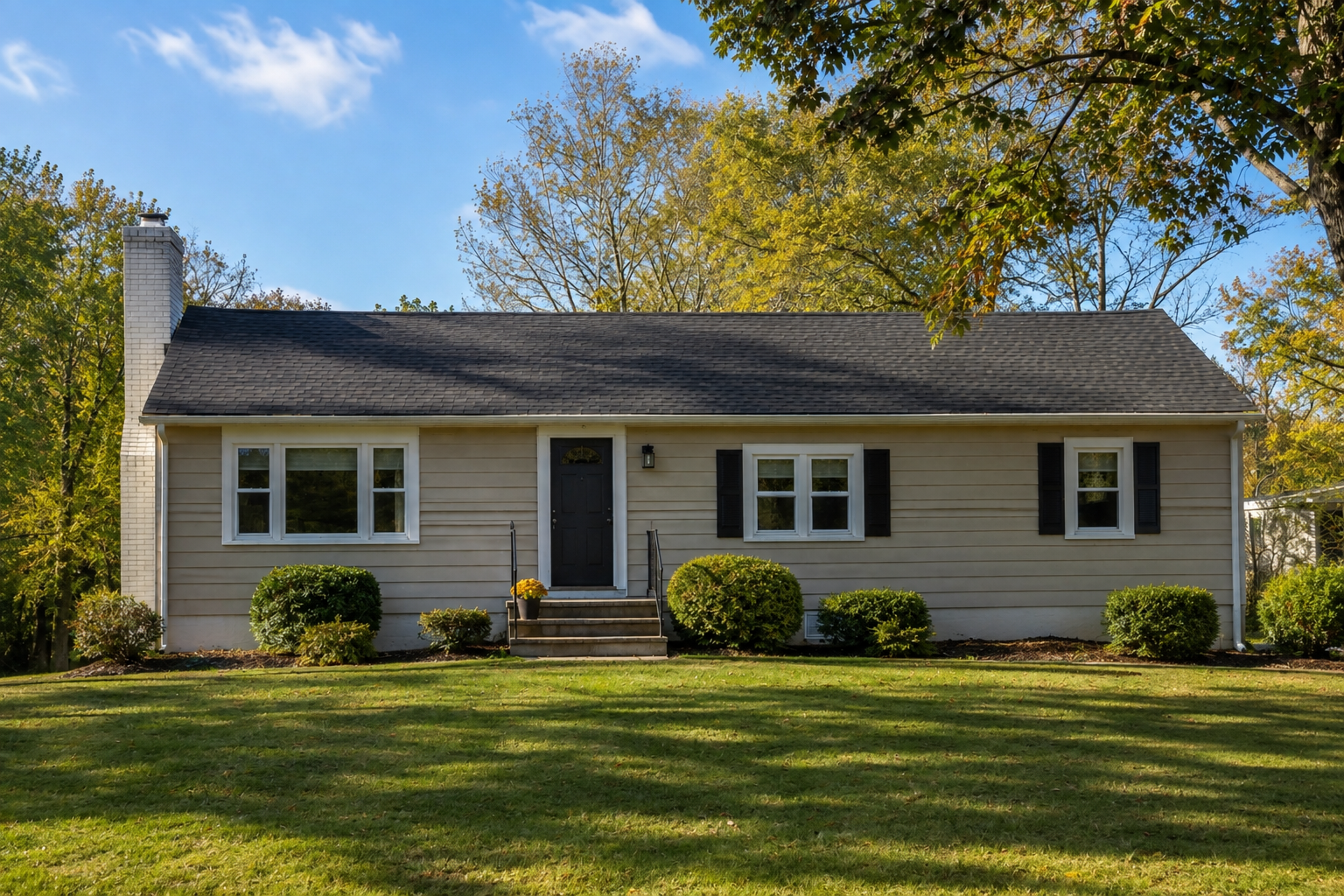
The traditional starter home is effectively extinct in Greater Boston and MetroWest. Massachusetts' median single family price reached $665,000 in May 2026, and the Greater Boston median hit $1,032,500 in April. Nationally, only about 11% of new construction sales are homes under 1,400 square feet, and first time buyers now make up just 21% of all purchases, the lowest share ever recorded. The entry point hasn't disappeared, though. It moved: to condos and townhouses, to two family properties, to ADUs, and to towns one commuter rail stop further out.
What a “starter home” used to mean — and why it's gone
For two generations, the housing ladder in Massachusetts worked in predictable rungs. You bought a modest Cape or ranch in your late twenties, built equity for five to seven years, then traded up to the colonial with the second bathroom. The first rung was small on purpose: under about 1,400 square feet, one bath, unfinished basement, and priced so a single household income could carry it.
That rung has been sawed off. Roughly 40% of homes built in 1982 fell under 1,400 square feet. By 2023 that figure was around 9%. Nationally, builders delivered approximately 418,000 entry-level homes a year in the late 1970s; by 2020 that number had collapsed to roughly 65,000.
The reason isn't mysterious, small new builds actually cost more per square foot to produce than large ones because permitting, site prep, utility hookups, and labor mobilization cost roughly the same whether you're framing 1,200 square feet or 2,400.
The Massachusetts twist
We have a second problem the rest of the country doesn't. Our existing small home stock, the postwar Capes of Natick, Framingham, Dedham, and Waltham is frozen in place. Owners holding sub-3% pandemic mortgages have almost no financial reason to sell. So the starter homes that already exist rarely come to market, and when they do, first-time buyers compete with investors and downsizers paying cash.
The Massachusetts numbers, as of August 2026
Here is what the entry point actually costs across our service area right now:
| Market |
Recent median (single-family) |
What that means for buyers |
| Massachusetts statewide |
$665,000 (May 2026) |
Essentially flat year over year, prices stopped climbing, but never corrected |
| Greater Boston region |
$1,032,500 (April 2026) |
Up from $989,500 a year earlier; January's median was $891,750 |
| MetroWest cluster (Framingham, Natick, Waltham) |
Prices +10.4% YoY; volume +19.3% |
The strongest cluster in the region, demand shifted west |
| Natick |
Roughly $950,000–$960,000 |
Under three weeks on market; multiple offers on the best listings |
| Luxury belt (Weston, Lincoln, Concord, Wayland, Sudbury, Dover) |
$1.36M, down 10.1% YoY |
Buyers now negotiating roughly 2.4% under list, a real high-end correction |
Two things in that table matter more than the headline prices. First, the region has inverted: the expensive towns softened while MetroWest got hotter, because families priced out of the inner belt moved west and bid there instead. Second, statewide inventory sits near two months of supply. Anything priced correctly does not stay on the market.
Who's actually buying — and who isn't
The National Association of REALTORS reported that first time buyers fell to 21% of all purchases, an all-time low, while the typical first time buyer's age climbed to 40. Meanwhile, baby boomers overtook millennials as the largest buyer group at roughly 42% of purchases, and 30% of repeat buyers paid all cash.
Translated to a MetroWest kitchen table: the buyer competing with you for that $700,000 split level is frequently not another 29 year old. It's a 44 year old with a home to sell, or a downsizer with cash from a $1.4M sale in Wellesley.
Five entry points that replaced the starter home
The ladder didn't vanish. It got rebuilt with different rungs. These are the five paths we see working right now in Greater Boston and MetroWest.
1. The condo or townhouse first step
This is now the most common genuine entry point in our market. Massachusetts condo prices have been rising alongside single family, but the absolute entry number is dramatically lower and a Framingham or Waltham two bedroom condo builds equity in exactly the same way a Cape does. The trade-offs are real: condo fees, less control, and a resale pool that thins when rates rise. But the alternative for most buyers isn't a house. It's another year of rent.
What to check before you write an offer: reserve fund health, special assessment history, and pet and rental restrictions if you might lease it later.
2. The two-family house hack
Massachusetts has an advantage most of the country lacks: a deep stock of two-, three-, and four-family properties in Framingham, Waltham, Marlborough, Worcester, and the inner-belt cities. Buy the two-family, live in one unit, rent the other, and let a tenant carry a meaningful slice of your mortgage.
This is not passive. You are a landlord on day one, with Massachusetts tenant law, a security-deposit statute that punishes sloppy paperwork, and a 2 a.m. boiler failure that is now your 2 a.m. boiler failure. But owner-occupied multifamily qualifies for the same low down payment financing as a single family, and MassHousing loans explicitly permit 2–4 unit purchases.
3. The ADU play
The 2024 Affordable Homes Act legalized accessory dwelling units by right in single-family zoning districts statewide — a structural change that Massachusetts towns have been adopting through 2025 and 2026. For buyers, this reframes what a property is worth. A house with a buildable ADU footprint carries future rental income or a place to house aging parents. For sellers, an existing or permittable ADU is now a genuine marketing asset rather than an oddity.
Check your specific town's adopted bylaw before you count on it. Implementation and dimensional rules vary considerably from Framingham to Sudbury.
4. Buying with partners — and buying the compromise
Siblings buying together. Two couples buying a two family. Parents contributing equity for a share of the upside. These arrangements were fringe in 2015 and are ordinary now. They require a written co-ownership agreement covering exit, valuation, and what happens when one party's life changes - that's a conversation with an attorney, not a handshake.
The other compromise that still works: buy the house that needs work, in the town you want, rather than the finished house in the town you'll resent. MassHousing's Purchase and Rehabilitation loan finances the purchase price plus renovation costs in a single mortgage. Cosmetic ugliness is the last remaining discount in this market. Structural problems are not — know the difference before you bid.
5. Skipping the ladder entirely
A growing number of MetroWest buyers are stretching once, buying the house they intend to stay in for fifteen years, and skipping the trade-up move altogether. When each transaction costs 8–10% in combined friction, and when moving up means re-entering a market where your equity buys proportionally less, the ladder itself starts to look expensive.
This only works if the stretch is genuine and not aspirational. A payment you can carry through a job loss is a stretch; a payment that requires a bonus you haven't earned yet is a hazard.
If you're selling: this is your market
Everything above is a buyer's problem and a seller's opportunity with one important asterisk.
- If your home is under roughly $800,000 in MetroWest, you own the scarcest asset class in the region. Entry-level product clears fast, often above list.
- If your home is above $1.5M in the luxury belt, the correction is real. Median sale prices in those towns dropped 10.1% year over year and sale-to-list fell from 100.3% to 97.9%. Price it to the market that exists, not to your 2022 neighbor's comp.
- Overpricing is now self-defeating in a visible way. In a market where correctly priced homes clear immediately, days on market is itself a signal to buyers that something is wrong.
- If you're a move-up seller, you're negotiating two transactions in opposite market conditions at once. Sequencing, not price, is usually what determines the outcome.
What Massachusetts is doing about it
The policy response exists, though it works on a longer timeline than any individual purchase. The Affordable Homes Act legalized ADUs statewide and funded production. The Healey administration committed $25 million to expand MassHousing homebuyer assistance and lowered rates for eligible first time buyers using a MassHousing mortgage.
For buyers right now, the practical programs worth asking a lender about:
- MassHousing Mortgage fixed-rate financing with down payment assistance and MI Plus job-loss protection, usable for condos and 2–4 unit properties
- ONE Mortgage (Massachusetts Housing Partnership) 30 year fixed with no private mortgage insurance requirement for income-eligible first-time buyers
Frequently asked questions
Is the starter home really dead in Massachusetts?
In its traditional form, yes. A sub 1,400 square foot single family home priced for a first-time buyer on one income essentially does not exist in Greater Boston or MetroWest anymore. Builders stopped producing them and existing owners aren't selling them. The entry point moved to condos, townhouses, and multifamily properties rather than disappearing outright.
What is the cheapest way to buy a first home in MetroWest?
Generally a two bedroom condo or a two family owner occupied purchase, paired with a MassHousing or ONE Mortgage low-down-payment product. Towns slightly further from the commuter rail core and properties needing cosmetic work carry the remaining discounts.
What is the median home price in Greater Boston in 2026?
The Greater Boston Association of REALTORS reported a median single-family price of $1,032,500 in April 2026, up from $989,500 a year earlier. Statewide, the Massachusetts median single-family price was $665,000 in May 2026.
Should I wait for prices to drop?
Massachusetts prices have flattened, not fallen — and the flattening is happening at the top of the market, not the entry level. Statewide supply sits around two months. Waiting has historically cost Massachusetts buyers more in lost equity than it saved in purchase price, though nobody can promise that pattern continues. The stronger question is whether your income, savings, and job stability support a purchase now.
Are mortgage rates coming down?
The 30-year fixed has spent 2026 in roughly the 6% range, down from 2025 averages but far above the pandemic era. Most forecasts through 2026 kept rates in the low-to-mid 6s. Plan around the payment you can afford at today's rate, and treat any future refinance as a bonus rather than a strategy.
Can I really buy a home in Massachusetts with a low down payment?
Yes. MassHousing offers down payment assistance for eligible buyers, and the ONE Mortgage eliminates the PMI requirement for income qualified first time buyers. Both require a homebuyer education course and have income and purchase price limits that vary by community.
Is a condo a bad investment compared to a house?
Not inherently. A condo builds equity and locks your housing cost the same way a house does. It appreciates more slowly than single family in most Massachusetts submarkets and carries fees you don't control, so the honest comparison is condo versus renting rather than condo versus house, because for most first time buyers here, the house isn't the actual alternative.

Kerri Mulvey
Realtor® | Kerri Mulvey | Moor Realty Group
or another way