

Categories
Investor Education, Real Estate InvestingPublished May 26, 2026
Real Estate Investing in MetroWest, MA: The Concepts That Separate Smart Deals from Expensive Mistakes

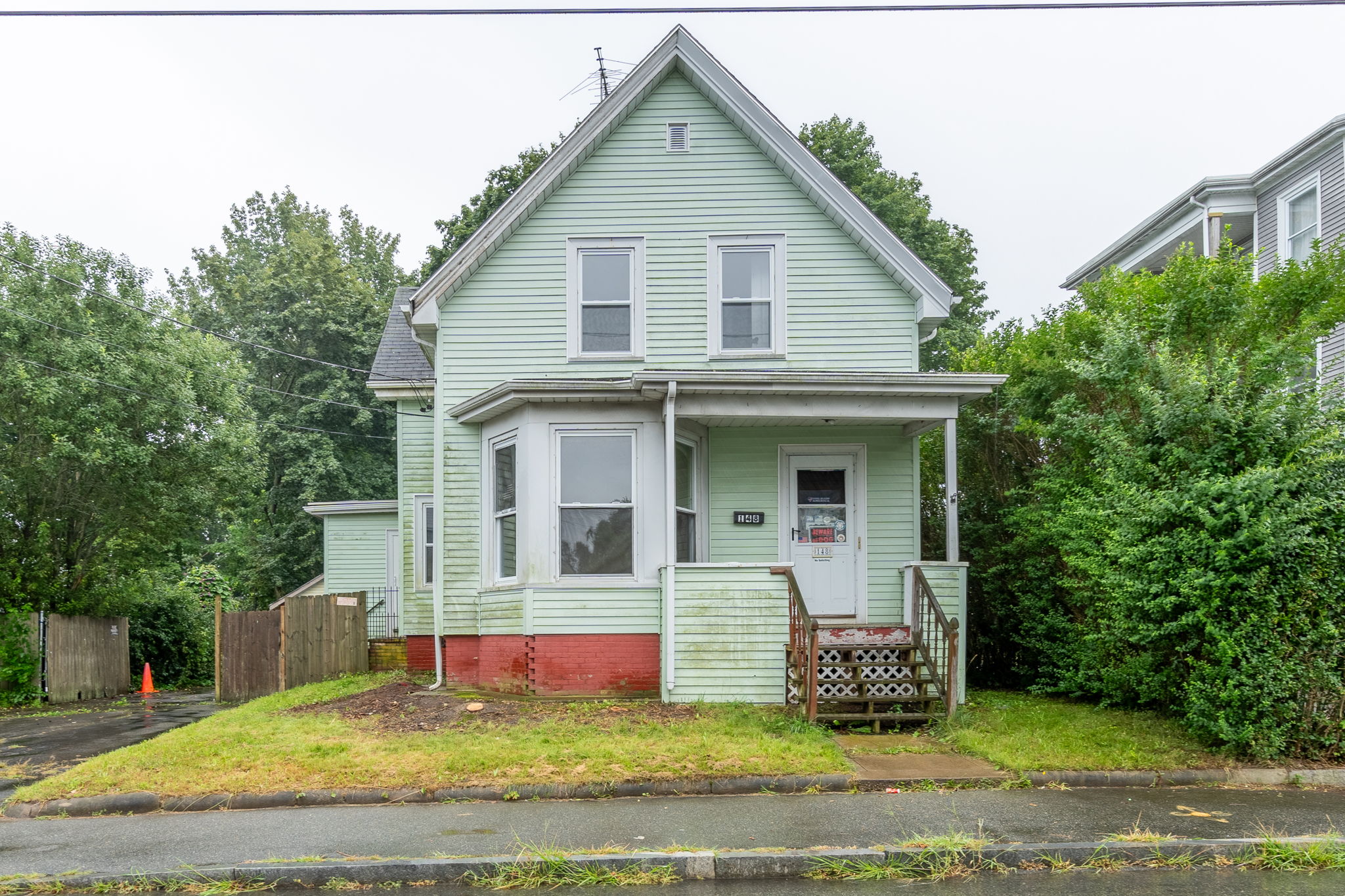
Buy box. ARV. Cap rate. Rent roll. BRRRR. If you want to invest near Boston, you need to know these cold — and know how they apply to this specific market.
Real estate investing has a language. Investors who speak it fluently close profitable deals. Investors who don't end up overpaying, under-planning, or walking away from the table not knowing why the numbers didn't work. This guide covers the core investment principles every serious investor needs to understand — and maps each concept directly to the MetroWest, Massachusetts market where VIP Group operates every day.
Whether you're evaluating your first two-family in Framingham, running numbers on a distressed triple-decker in Marlborough, or planning a refinance-and-reinvest strategy across multiple properties, every concept in this guide applies to what you're doing. We're not going to define terms in a vacuum. We're going to show you how they work — with real MetroWest numbers — so you can sit across from a seller or a lender and know exactly where you stand.
VIP Group at Moor Realty is the elite investor group serving buyers, sellers, and investors across Framingham, Natick, Marlborough, Milford, Northborough, Southborough, Westborough, Hudson, Ashland, and all of MetroWest and Greater Boston. We work with investors at every level — from first-time buyers to experienced portfolio operators. This is the knowledge we bring to every deal.
The Investment Strategies: Know Which Game You're Playing
Before analyzing a single property, you need to decide which investment strategy fits your goals, timeline, and capital position. Each strategy demands different properties, different financing, and different skills. Confusing them is one of the most common — and costly — beginner mistakes.
Buy-and-Hold
You acquire a property, rent it, and keep it for years or decades. Your returns come from three sources working together: monthly cash flow (rent minus all expenses), equity buildup as the mortgage pays down, and appreciation as the property increases in value over time. In MetroWest, buy-and-hold is the dominant investor strategy because the market rewards patience. Properties that barely cash flow at acquisition often generate strong returns over a 10-year hold as rents rise and debt shrinks. The ideal property type is small multifamily — two-families, triple-deckers, and small apartment buildings — where multiple rent streams offset expenses.
Fix-and-Flip
You acquire a distressed property at a discount, renovate it to market condition, and sell it within 6–18 months for a profit. The profit lives in the spread between your all-in cost (purchase plus rehab plus carrying costs) and the after-repair value (ARV). Flipping in MetroWest is active and competitive. Towns like Framingham, Marlborough, and Milford have enough older housing stock — much of it built in the 1950s through 1980s — to provide deal flow for experienced flippers who can accurately scope rehab costs and read the resale market. This is a high-skill, high-capital, high-risk strategy. The numbers must be right before you buy, not after.
The BRRRR Method
BRRRR stands for Buy, Rehab, Rent, Refinance, Repeat. It is the strategy that allows investors to recycle capital — pulling money back out of a completed deal to fund the next one — without selling the asset. Done correctly, BRRRR lets you build a rental portfolio while limiting how much of your own capital stays permanently tied up in any single property. We'll walk through a complete MetroWest BRRRR example later in this post.
House Hacking
You purchase a multifamily property, live in one unit, and rent the others. The rental income offsets or eliminates your housing cost, and you finance the property with owner-occupied terms — meaning as little as 3.5% down with FHA financing rather than the 20–25% required for investment property loans. House hacking is the most accessible entry point for first-time investors in MetroWest. A two-family in Framingham or Marlborough where one unit covers most or all of your mortgage payment is a legitimate wealth-building starting position.
Which strategy is right for you? If you're starting out, buy-and-hold or house hacking. If you have capital, a contractor network, and can read rehab costs accurately, consider BRRRR. Fix-and-flip as a standalone strategy requires the most expertise and carries the most risk — it should not be your entry point unless you have deep construction and market knowledge.
The Buy Box: Your Filter for Every Deal
A buy box is a written set of acquisition criteria that every property must meet before you spend serious time or money analyzing it. It is not a wish list — it is a decision framework. Investors who operate without a defined buy box waste months chasing deals that were never right for their goals. Investors with a tight buy box move faster, pass on the wrong deals quickly, and strike when the right property appears.
Here is how to define a buy box for MetroWest investing:
Property Type
Decide what you're buying. Two-family, three-family, single family, condo, or larger multifamily? In MetroWest, two-families and three-families are the investor sweet spot — small enough to qualify for residential financing (1–4 units), large enough to generate meaningful cash flow, and plentiful enough across the region to provide consistent deal flow.
Geography
Pick two or three target towns and learn them deeply. Rental rates, vacancy levels, property taxes, buyer pools, and deal frequency vary significantly across MetroWest.
Purchase Price Range
Your maximum purchase price should be derived from the numbers — what the property can support in rent, what your financing allows, and what the deal analysis says — not from what you hope to find. Set a hard ceiling and don't negotiate yourself past it.
Minimum Gross Rent
Use gross rent as a quick filter before running full analysis. In MetroWest today, the classic 1% rule (monthly rent = 1% of purchase price) is rarely achievable. Realistic gross rent ratios run 0.60%–0.80% in most towns. That's not disqualifying — but it means your cash flow will be thin and every expense line matters. Run the full numbers before making an offer.
Condition Threshold
Define upfront how much rehabilitation you're prepared to manage. Move-in ready properties carry premium prices. Properties needing cosmetic work (paint, flooring, fixtures) often represent the best value. Properties needing structural, mechanical, or major system work are only appropriate if you can scope and budget the rehab accurately — and those numbers must be in hand before you write an offer.
Minimum Cash Reserves After Closing
A buy box should include a reserve requirement. In Massachusetts, where winters are hard on buildings and the eviction process is slow, we recommend a minimum of 3–6 months of operating expenses in reserve beyond your down payment and closing costs. Investors who close thin become distressed sellers within 18 months.
Write it down. Your buy box should be a one-page document — not a mental checklist. When you're standing in a property that doesn't quite hit your criteria but 'feels right,' the written buy box keeps you disciplined. Emotional acquisitions are where investors lose money.
ARV: After Repair Value — The Number Every Deal Flows From
After Repair Value, or ARV, is the estimated market value of a property after all planned renovations are complete. It is the foundational number in fix-and-flip analysis, BRRRR strategy, and any deal where you're buying below-market with the intent to improve the asset. Everything else in your deal math — maximum purchase price, rehab budget, projected profit, refinance proceeds — flows from ARV.
How to Calculate ARV
ARV is determined by analyzing recently sold comparable properties in similar condition, size, and location — but we don't stop there. We also look at properties currently under agreement, since those reflect where buyers and sellers are meeting right now. That combination gives us a true, real-time pulse on what the market will actually bear for a finished property.
In MetroWest, ARV for a renovated two-family depends heavily on town and unit configuration. Town matters enormously. This is why deep local knowledge, not just Zillow estimates, is essential for accurate ARV analysis.
How ARV Determines Your Maximum Purchase Price
Working backward from ARV is how experienced investors set their maximum allowable offer (MAO).
Critical rule: ARV is an estimate, not a guarantee. In a shifting market, ARVs can move between when you buy and when you sell or refinance. Always build a 5–10% buffer into your ARV assumption and run a downside scenario. What happens to your deal if ARV comes in 8% lower than expected?
Cap Rate: The Investor's Profitability Benchmark
Capitalization rate, universally called cap rate, measures the annual return a property generates relative to its value — independent of financing. It lets you compare properties of different sizes, types, and prices on equal footing. It is the a profitability metric for buy-and-hold investors.
Cap Rate = Net Operating Income (NOI) / Property Purchase Price
What Cap Rates Look Like in MetroWest Today
Cap rates in MetroWest are compressed by high acquisition prices and strong demand. Realistic cap rates on stabilized, fully-rented multifamily properties:
- Natick, Ashland: 4.0%–5.0% — Strong appreciation upside, thin current yield
- Framingham: 4.5%–5.5% — Market leader for investor volume
- Marlborough, Northborough, Southborough: 5.0%–6.0%
- Milford, Hudson, Grafton: 5.5%–6.5% — Best cash flow metrics in the region
A property with a higher cap rate is not automatically the better deal — it may be priced lower because it's in a weaker location, has deferred maintenance, or carries higher tenant risk. Cap rate is a starting point for analysis, not a substitute for it.
Cap Rate vs. Cash-on-Cash Return
Cap rate ignores financing. Cash-on-cash return (CoC) measures the actual cash return on the money you put in — after your mortgage payment. These two numbers can tell very different stories.
Cash-on-Cash Return = Annual Pre-Tax Cash Flow
--------------------------------
Total Cash Invested
Annual Pre-Tax Cash Flow = NOI - Annual Debt Service
(mortgage principal + interest)
In today's rate environment (7%+ on investment property loans), a MetroWest two-family with a 5.2% cap rate might generate a cash-on-cash return of only 2%–4% after debt service. That's not exciting on paper — but it may still be an excellent long-term hold when you factor in equity buildup, rent growth, and appreciation. Run both numbers. Understand what each one is telling you.
The Rent Roll: What It Is and How to Read It
A rent roll is a document that summarizes the income being generated by every unit in an investment property. It is the first thing a serious investor asks for when evaluating an income-producing property, and it is the first thing a lender will want to see when you're financing or refinancing one.
What a Rent Roll Contains
A complete rent roll for a MetroWest multifamily should include:
- Unit designation (Unit 1, Unit 2, etc.)
- Tenant name (or 'vacant' if unoccupied)
- Lease start and end date
- Monthly rent currently being paid
- Market rent (what the unit would rent for if vacant today)
- Security deposit held
- Payment status — current, late, or month-to-month
- Notes on any concessions, abatements, or deferred items
How to Analyze a Rent Roll
When you receive a rent roll, here is what you're looking for:
Compare in-place rents to market rents. If current tenants are paying significantly below market, there is upside — but there is also risk. Raising rents on existing tenants in Massachusetts requires proper notice, and tenants who've been in place at below-market rents often resist increases or relocate, creating vacancy cost. Discount the rent-upside story until you verify it.
Check lease expiration dates. Month-to-month tenancies give you flexibility but also indicate instability. Leases expiring in the next 90 days mean you may face vacancy shortly after closing.
Verify everything independently. Rent rolls can be inflated or inaccurate. Request actual lease agreements for every unit, bank statements showing rent deposits, and a current estoppel certificate if possible. What the seller says the property earns and what it actually earns are sometimes different numbers.
Watch for red flags. A 'current' tenant who paid first and last at signing but hasn't paid in three months. A rent roll showing all units occupied but no executed leases available. A property where the owner 'lives in one unit' and the other unit is below market with a family member as tenant. These are common situations in MetroWest multifamily transactions that require careful diligence.
The Rent Roll and Lender Underwriting
When you refinance or acquire with a DSCR loan or commercial loan, the lender will use the rent roll to underwrite the property's income. Most lenders apply a vacancy factor (typically 5–10%) and only credit a percentage of gross rents toward qualifying income. Know what your lender uses before you build your pro forma — the number that qualifies the loan is often lower than the gross rent number on the rent roll.
Pro tip: When building your own pro forma for a MetroWest rental, use actual market rents — not the seller's stated rents — as your baseline. Call two property managers in the target town and ask what specific unit configurations are currently renting for. That's your real number.
The BRRRR Method in MetroWest: A Complete Walkthrough
The BRRRR method — Buy, Rehab, Rent, Refinance, Repeat — is the most powerful wealth-building strategy available to real estate investors who want to scale without selling assets.
BRRRR reality check: The BRRRR method works when you buy at the right price, rehab on budget, and the appraiser agrees with your ARV. All three must go right. Investors who overpay, exceed their rehab budget, or get a low appraisal end up with capital trapped in the deal — which defeats the entire purpose. The discipline is in the acquisition, not the refinance.
Frequently Asked Questions: MetroWest Real Estate Investing
What is a good cap rate for investment property in MetroWest, Massachusetts?
For stabilized multifamily properties in MetroWest, a cap rate of 5.0%–6.5% is generally considered solid in today's market. Cap rates below 5% are common in premium towns like Natick and typically indicate an appreciation-driven investment. Cap rates above 7% in MetroWest usually signal a property with risk — deferred maintenance, tenant issues, or location constraints.
What does ARV mean in real estate investing?
ARV stands for After Repair Value — the estimated market value of a property after all planned renovations are complete. It is the starting point for flip analysis and BRRRR strategy, because your maximum purchase price, rehab budget, and refinance projections all flow from this number.
How does the BRRRR method work in Massachusetts?
BRRRR (Buy, Rehab, Rent, Refinance, Repeat) works by purchasing a distressed property below market value, improving it to increase its appraised value, placing tenants to stabilize income, and then refinancing at the improved value to pull your invested capital back out. In Massachusetts, the refinance is typically a conventional investment property cash-out refinance at 70–75% LTV. The process works best in markets like MetroWest where strong rental demand supports post-rehab appraisals.
What is a rent roll and why does it matter?
A rent roll is a summary of all rental income a property generates — unit by unit, tenant by tenant, with lease terms and payment status. It matters because it is the income foundation of every investment analysis. Lenders use it to underwrite financing. Buyers use it to calculate NOI and cap rate. A rent roll that has not been independently verified is just the seller's story — always cross-check against actual leases and bank deposits.
Is Framingham a good market for the BRRRR strategy?
Yes — Framingham has the deal flow, the tenant demand, and the appraiser familiarity with renovated multifamily properties to support BRRRR deals. The key is finding properties priced for their current distressed condition, not their potential. That requires relationships with agents who have access to motivated sellers before properties hit the open market — which is exactly what VIP Group is positioned to provide.
Work With Investors Who Know This Market Cold
VIP Group at Moor Realty is not a general real estate team that occasionally works with investors. We are a dedicated investor program built to serve buyers and sellers who are serious about real estate as a wealth-building vehicle. We understand ARV, cap rates, BRRRR, rent rolls, and buy boxes because we use these tools every day — on every deal, in every town across MetroWest and Greater Boston.
We work with investors at every level: people analyzing their first two-family in Marlborough, experienced operators building multi-property portfolios, and out-of-state investors who need a trusted local team with the expertise to execute on their behalf.
If you are serious about investing in Framingham, Natick, Marlborough, Milford, Northborough, or anywhere in MetroWest or Greater Boston, the next step is a conversation with VIP Group.
Contact VIP Group at Moor Realty today. Call, text, or email vip@moorrealty.com to schedule your no-obligation investor strategy session.
VIP Group at Moor Realty | Serving investors in Framingham, Natick, Marlborough, Milford, Northborough, Southborough, Westborough, Hudson, Ashland, and all of MetroWest and Greater Boston, MA.

Kerri Mulvey
Realtor® | Kerri Mulvey | Moor Realty Group
or another way